KOA Eatery
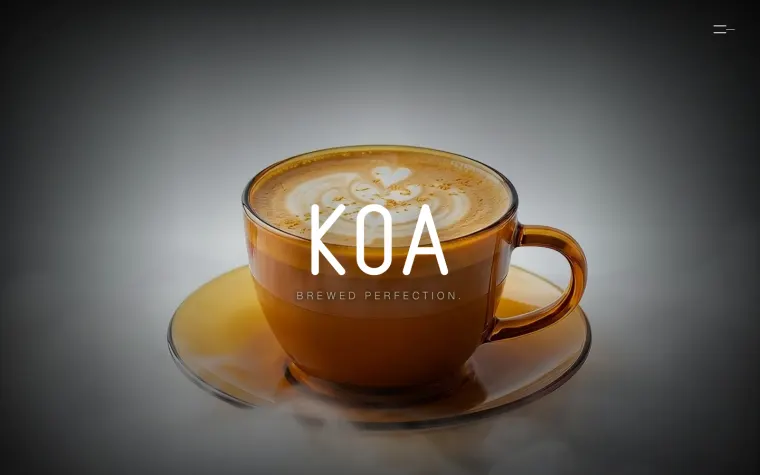
A specialty coffee house in Oman, where the site carries the room rather than a catalogue — sourcing and craft up front, and QR ordering that has to work one-handed at a table, on a phone, on café wifi.
- Next.js
- Vercel
Services
Not sure which of these you need?
Talk to an engineerDubai · Selected work
Every project below is public. Open the live site, look at how it loads on your phone, and read what was actually difficult about building it — then decide whether that is the kind of work you want done to yours.
The work
Every project here is live, public and linked. Open the site, put it on a phone and see whether it holds up — that is a more useful reference than anything we could write about it.

A specialty coffee house in Oman, where the site carries the room rather than a catalogue — sourcing and craft up front, and QR ordering that has to work one-handed at a table, on a phone, on café wifi.

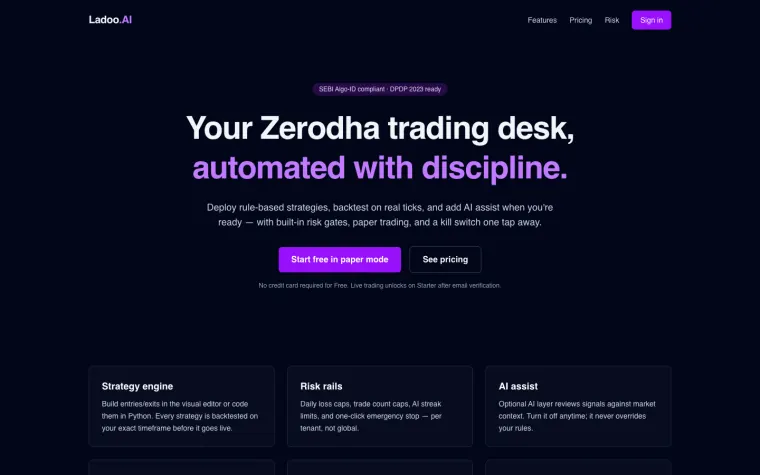
A rule-based trading desk on top of Zerodha: visual and Python strategy building, backtesting on real ticks, and an optional AI layer that reviews signals but never overrides the rules. Risk rails and a one-tap kill switch are product features, not settings.

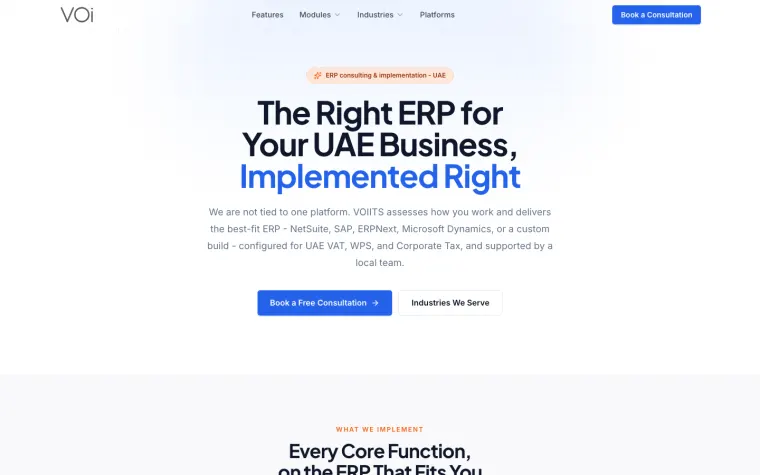
A vendor-agnostic ERP implementation practice in Dubai — NetSuite, SAP, ERPNext and Dynamics — where the site has to make an abstract, long-cycle service concrete, and carry UAE compliance detail like VAT, WPS and Corporate Tax without reading as a spec sheet.
There are no figures beside these names. A conversion rate or a load-time improvement lives in the client's own analytics, so printing one here — without them publishing it — would be making a claim about somebody else's business. What the cards carry instead is checkable in a minute: the live URL, the sector and what each one is built on.
The hard part
Finished screens tell you very little, because every agency's screens look finished. The useful question is what a build had to survive — so here is the constraint that shaped each of the three above.
KOA Eatery
A QR menu is opened on a phone by someone already holding a cup, in a room where everyone else is on the same network. That moves the decisions away from the desktop layout: what a thumb can reach, how much has to arrive before the menu is usable at all, and how much of the room the photography can carry before it becomes the reason the page is slow.
Ladoo.AI
Strategies are built visually or in Python and backtested on real ticks, so the interface has to make a rule's behaviour legible before anyone runs it with money behind it. Risk rails and a one-tap kill switch sit in the product rather than buried in preferences, and the optional AI layer reviews signals without ever overriding the rules — a boundary the interface has to keep visible at all times.
VOIITS
ERP implementation is chosen by a committee across a long cycle, and this practice is vendor-agnostic across NetSuite, SAP, ERPNext and Dynamics — so there is no single product shot to lead with. The site has to make the service specific enough to be judged, and carry UAE compliance detail like VAT, WPS and Corporate Tax, without turning into a spec sheet nobody reaches the end of.
How to read one
Useful whoever you end up hiring. Five things a work page commonly shows, what each one actually evidences, and the question that gets you the rest of it.
| What you are shown | What it actually evidences | What to ask |
|---|---|---|
| A grid of client logos | That those companies exist. It does not say what was built, by whom, or whether any of it is still running. | Which of these did you build, which did you only maintain, and can I open the ones you designed? |
| A screenshot with no link | That a design was produced. A picture cannot be opened, measured, or checked for whether it ever shipped. | What is the live URL? A finished site is a link; an unlinked screenshot is a mockup until shown otherwise. |
| A headline metric, unattributed | On its own, nothing. A figure like an uplift in enquiries comes out of the client's analytics, so an agency quoting one without naming its source is asking to be taken on trust. | Who measured this, over what period, and will the client confirm it? |
| A long list of projects | Volume, and volume alone. It does not separate a build from a template install, or a project delivered last month from one delivered by people who have since left. | Who specifically worked on this one, and are they still here? |
| A named stack | That the tooling is disclosed, which is worth more than it sounds. A stack nobody will name is one you cannot hire for and cannot hand to anyone else. | What is it built on, whose account holds the repository, and what happens to it if we part ways? |
Applied to this page: three links, three sectors, three stacks, and no numbers — because the numbers worth quoting belong to the three companies above and are theirs to publish, not ours. Everything here opens in a new tab and can be checked in about a minute, which is the whole point of showing it this way.
What produced it
Every site above came out of the same two disciplines, plus the care plan that keeps a build as fast in year three as it was on launch day.
Interface design that earns its keep — structured in Figma, handed over as a system your team can extend without us.
The build itself: custom code, WordPress, e-commerce and web applications, written to be read by whoever maintains it next.
What happens after launch — updates, monitoring, speed and hosting, so the site is as fast in year three as on day one.
Tell us what you need. You will get a scoped response with an indicative price — from an engineer, not a salesperson.